Microsoft just put a coding environment and a persistent AI agent into the same app your finance team uses to draft emails. The redesigned Copilot, unveiled on September 25, bundles three capabilities behind one interface: Home for chat and delegated work, Code for building internal apps, and Autopilot for agents that keep running while you sleep. The Copilot super app is Microsoft's most aggressive bid yet to own the AI-at-work layer, and it arrives with a billing model that should make every IT admin pay attention.
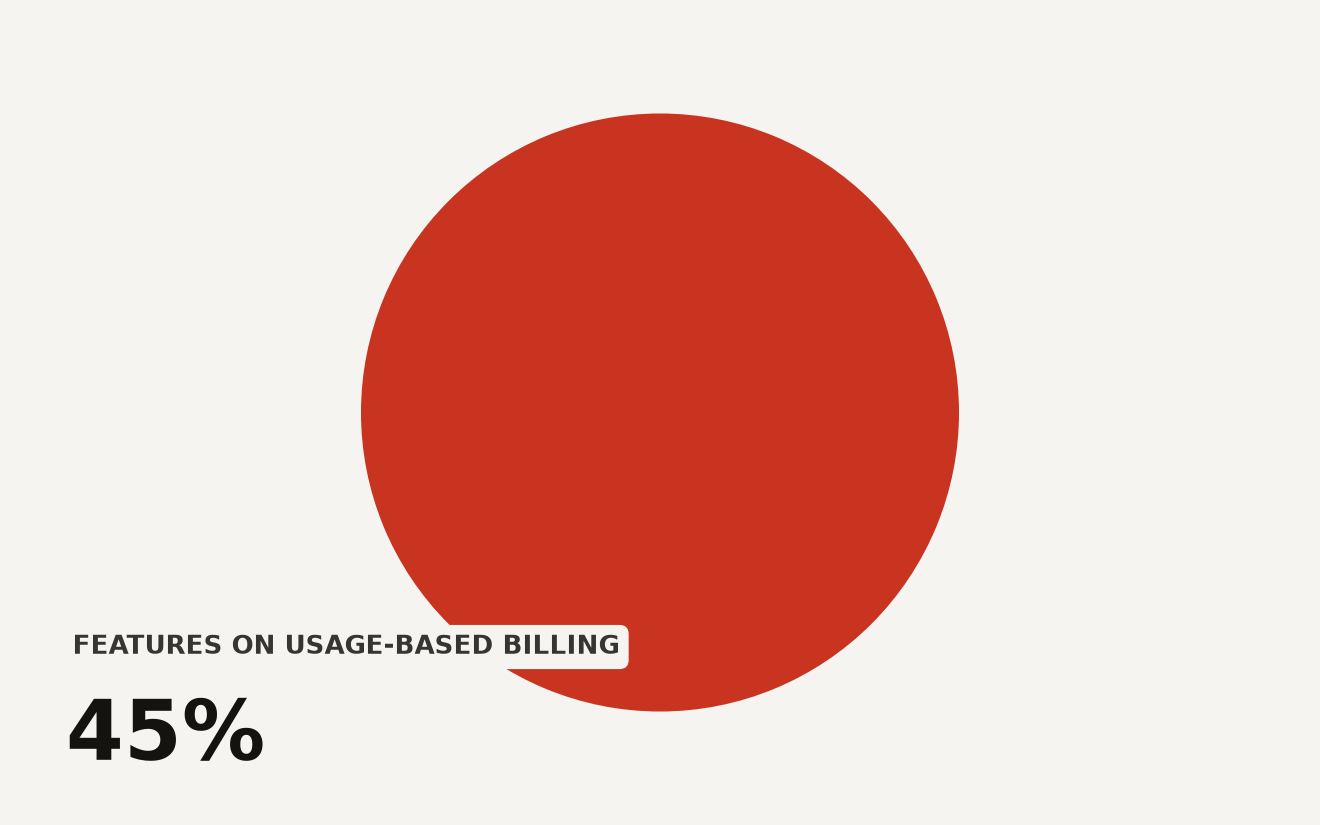
Nearly half the named features in the new Copilot run on usage-based billing. The flat per-seat license most enterprises already budget for covers only Chat and the Office suite. Everything agentic, including Cowork, Code, Autopilot, and frontier models Astra and Fable, bills by consumption. That split is what matters. The three-tab layout is the packaging.
What exactly did Microsoft ship on September 25?
Three tabs, two billing models, and a rebrand. The new Copilot app replaces the piecemeal Copilot experience that Microsoft has reshuffled repeatedly since the Bing chatbot days. Home is the default landing page, combining Chat for quick questions with Cowork for end-to-end delegated tasks like RFP responses and launch kits. Microsoft also folded Office into the Home experience, so Word, Excel, and PowerPoint run inside the app rather than launching separately.
The Code tab is the addition nobody expected in a knowledge-worker tool. Jared Spataro, Microsoft's chief marketing officer of AI at work, says Code is powered by the same technology as GitHub Copilot and runs in a sandboxed environment hosted inside the customer's tenant. It lets any employee build an app, tracker, dashboard, or automation and share it with colleagues as a cloud-hosted internal tool. Your software developers keep using GitHub Copilot for their day-to-day work, but now everyone else gets a stripped-down version of the same engine.
Autopilot, previously called Scout, is the persistent agent. It lives in the customer's Microsoft tenant with its own identity, memory, computer, and workspace, according to Spataro, and shows up in Teams, Outlook, and documents where you can @mention it like a colleague. Reuters confirmed that the agent will carry its own identity in the company directory. The rollout is staggered: Home and Code reach Microsoft's Frontier early-access program in the coming weeks, Autopilot enters private preview at the end of September, and Code will be available in preview for Microsoft 365 Premium and Pro subscribers later in 2026.
Why does the billing split change budgeting for IT?
Because the fixed-cost era of Copilot is over for anyone who touches the new features. The user subscription license, or USL, gives you Chat across the Office suite with an auto model picker that weighs accuracy, speed, and cost per request. That part is predictable. The usage-based billing, or UBB, layer is where costs spiral. Cowork, Code, Autopilot, and any calls to frontier models like Astra and Fable all bill by consumption, with no published rate card in today's announcement.
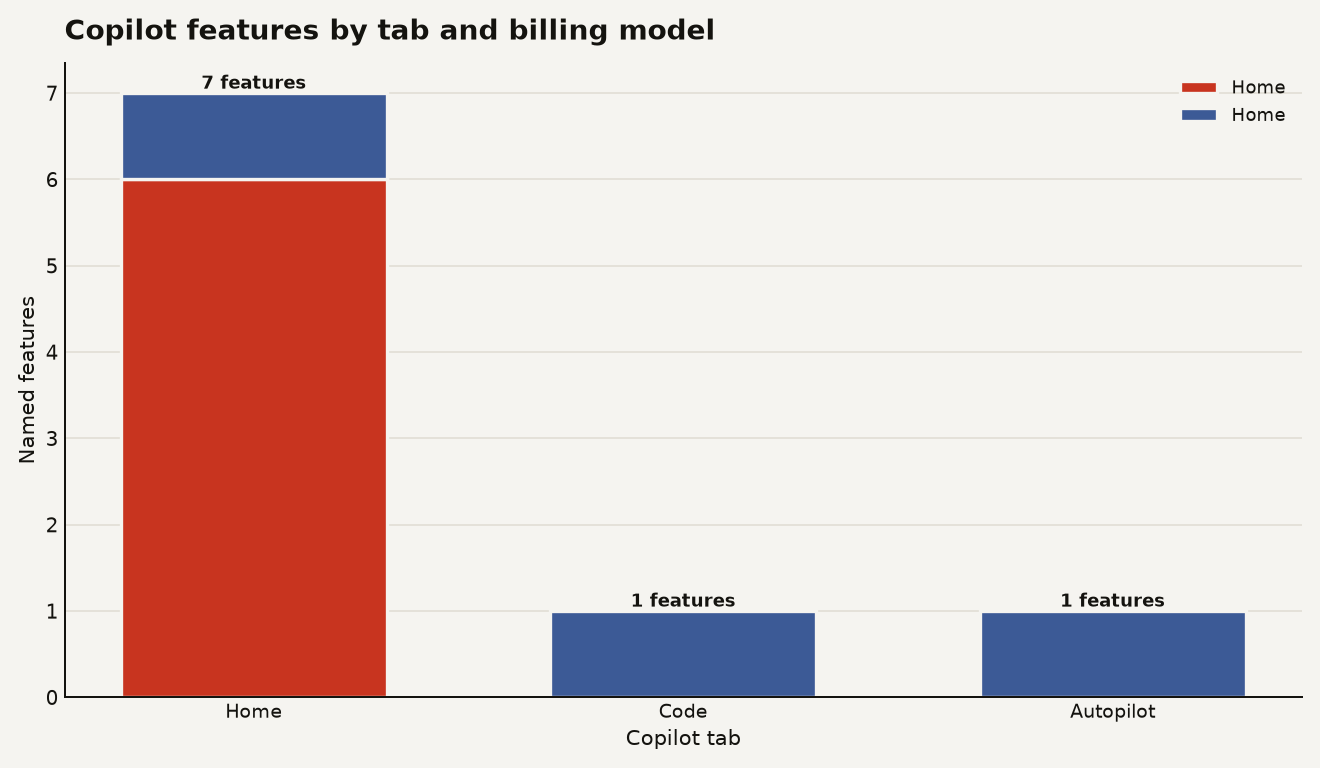
The chart below breaks down how the three tabs divide between fixed and consumption-based billing. Home carries six USL features and one UBB feature, while Code and Autopilot are entirely usage-based.
Microsoft acknowledged this risk by launching FinOps for AI alongside the app. The company's blog post calls it a "shared discipline for managing AI spend," with cost management expanding beyond Cowork and Work IQ APIs to include Code and the Copilot Managed Runtime. Admins can set which model families are available to different user groups, route credit requests through approval workflows, and monitor which Cowork tasks consume the most budget. Support for agents built in Copilot Studio is planned for October.
Here is what the billing split means for you in practice:
- Your USL spend stays flat. Chat, Word, Excel, PowerPoint, Outlook, and Teams remain per-seat. If employees never touch Cowork, Code, or Autopilot, your bill does not change.
- Every agentic task is variable. An Autopilot agent watching Teams channels and running follow-ups all night is a meter running. A Cowork task that iterates on a financial close package could consume more tokens than a month of Chat queries.
- Governance is now a cost function. The same admin who controls tenant security also controls how much each team can spend. FinOps for AI puts spending policies, model family restrictions, and credit routing in the same console.
- No public rate card yet. Microsoft has not published per-token or per-task pricing for UBB features. IT teams building FY2027 budgets are working blind on the most expensive part of the stack.
This is the section to screenshot. The enterprise AI agent pilots that 89 percent never reach production often stall on exactly this problem: the pilot works, the billing model breaks. Microsoft just made the pilot easier and the budgeting harder.
Does the Code tab cannibalize developer tooling?
Your engineering team will keep using GitHub Copilot for production work. What should worry you is the other direction: non-developers shipping cloud-hosted apps inside your tenant with no engineering review. Microsoft says the sandbox is secure and tenant-hosted, but a secure sandbox and governed shadow IT are different things. Every internal app built in Code is another surface your security team needs to audit.
The competitive context matters here. CNBC notes that the market has been consolidating around easy-to-use products from OpenAI and Anthropic, and Microsoft is chasing them. The Code tab is Microsoft's answer to Claude Artifacts and ChatGPT Canvas: give non-technical users a way to build and share without leaving the corporate environment. The difference is that Microsoft's version runs inside your identity perimeter, which is either a governance advantage or a compliance headache depending on how prepared your team is. Satya Nadella called Copilot "a new OS for work" on X, and Spataro compared it to Office, saying "Just as Office defined work for the PC era, the new Copilot is built to define it for the AI era." That is a big claim for a product that, as The Verge observes, has failed in the consumer space against Claude and ChatGPT.
What should you do before this reaches your tenant?
Start with FinOps, not features. The temptation will be to pilot Autopilot or let a power user build something in Code. Resist that until the spending controls are in place.
Specific steps:
- Map your USL population against your likely UBB population. Not every Copilot-licensed employee will use agentic features. Identify the teams most likely to adopt Cowork and Autopilot first, and set their model family restrictions before they start.
- Get into the Frontier program if you are not already. Home and Code ship there first. Early access means early visibility into what actual UBB consumption looks like before broad rollout.
- Audit your tenant for shadow IT risk from Code. Decide now who can publish internal apps and who cannot. Microsoft's permissions model exists, but defaults matter.
- Watch the Autopilot private preview closely. A persistent agent with its own directory identity that runs while you sleep is a new attack surface. Identity governance teams should be in the preview, not just productivity teams.
- Budget conservatively for FY2027. With no public rate card for UBB features, assume frontier model calls cost more than you expect. Microsoft built FinOps for AI because they know the bills will surprise people.
The broader signal is that Microsoft is collapsing the distance between AI chat, coding, and agents into a single surface. Whether that matters depends on whether your organization runs on Microsoft 365. If it does, the Copilot super app will reach your tenant whether you plan for it or not. If you are building on a multi-vendor stack with Claude, GPT, or open models, the harness you choose matters more than the vendor, and Microsoft's bundling does not change that calculus.
One app, two budgets, zero rate cards
Microsoft has redesigned Copilot enough times that skepticism is warranted. This version is structurally different because the billing model changed. A per-seat license is a budget line item. A usage-based meter on agents that run overnight is a variable cost that scales with enthusiasm. The companies that get burned will be the ones that treat the Copilot super app as a productivity upgrade rather than a new spend category. The companies that get value will be the ones whose IT teams treat FinOps for AI as a first-class discipline before the first Autopilot agent starts spending their money.
Sources
- The Verge: Microsoft thinks its new Copilot 'super app' will be as influential as Office
- Microsoft Blog: Introducing the new Copilot with Home, Code and Autopilot
- Reuters: Microsoft revamps Copilot with code generation, agentic AI tools
- CNBC: Microsoft touts Copilot app with coding, Autopilot to chase Anthropic