Open-source coding agent benchmarks usually cherry-pick. They show the wins and bury the losses, leaving you to guess whether the tool survives contact with your own codebase. The latest entry in that crowded field is AutoDev Studio, an open-source multi-agent harness for the full software development lifecycle. Its pitch is simple: learn the repo once, then run tasks against that learned context instead of starting cold every time. The headline result is a 7% to 75% cost reduction across six well-localized tasks on repositories up to roughly 82,000 lines of code, compared to a cold claude -p run.
This matters now because the cost of running AI coding agents at scale is becoming a line item that engineering leaders cannot ignore. We have covered the arrival of that bill before, and the pattern is accelerating: agents that re-discover your codebase from scratch on every invocation burn tokens and time. AutoDev Studio's approach, building a persistent knowledge layer that agents query before acting, is one architectural answer to that problem. The question is whether the benchmark holds up under scrutiny, and whether the trade-offs fit your stack.
What does the benchmark actually measure?
The author evaluated AutoDev Studio against a cold claude -p run on six well-localized tasks across repositories up to about 82,000 lines of code. Well-localized means the fix or feature touched a bounded area of the code, not a sweeping refactor. On all six tasks, AutoDev Studio was cheaper, with savings ranging from 7% to 75%.
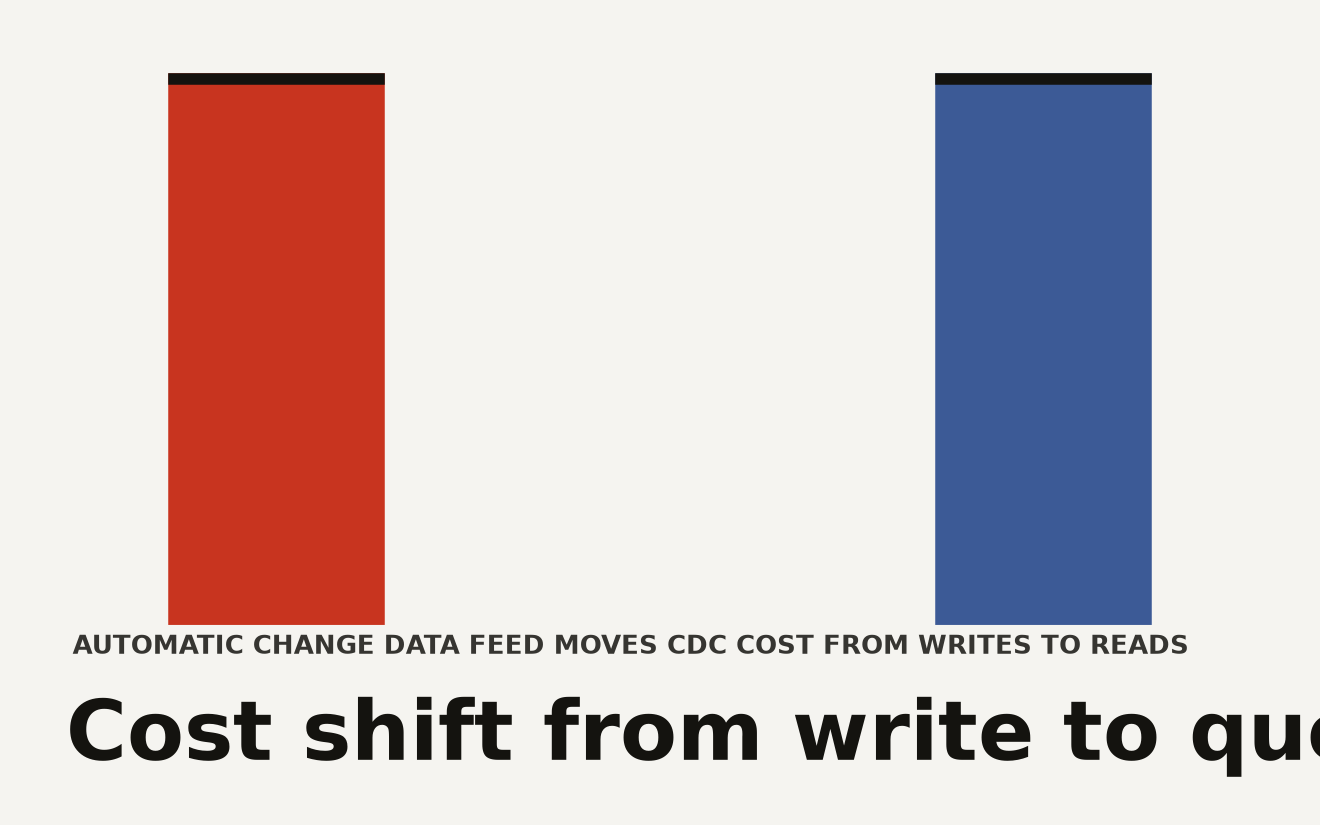
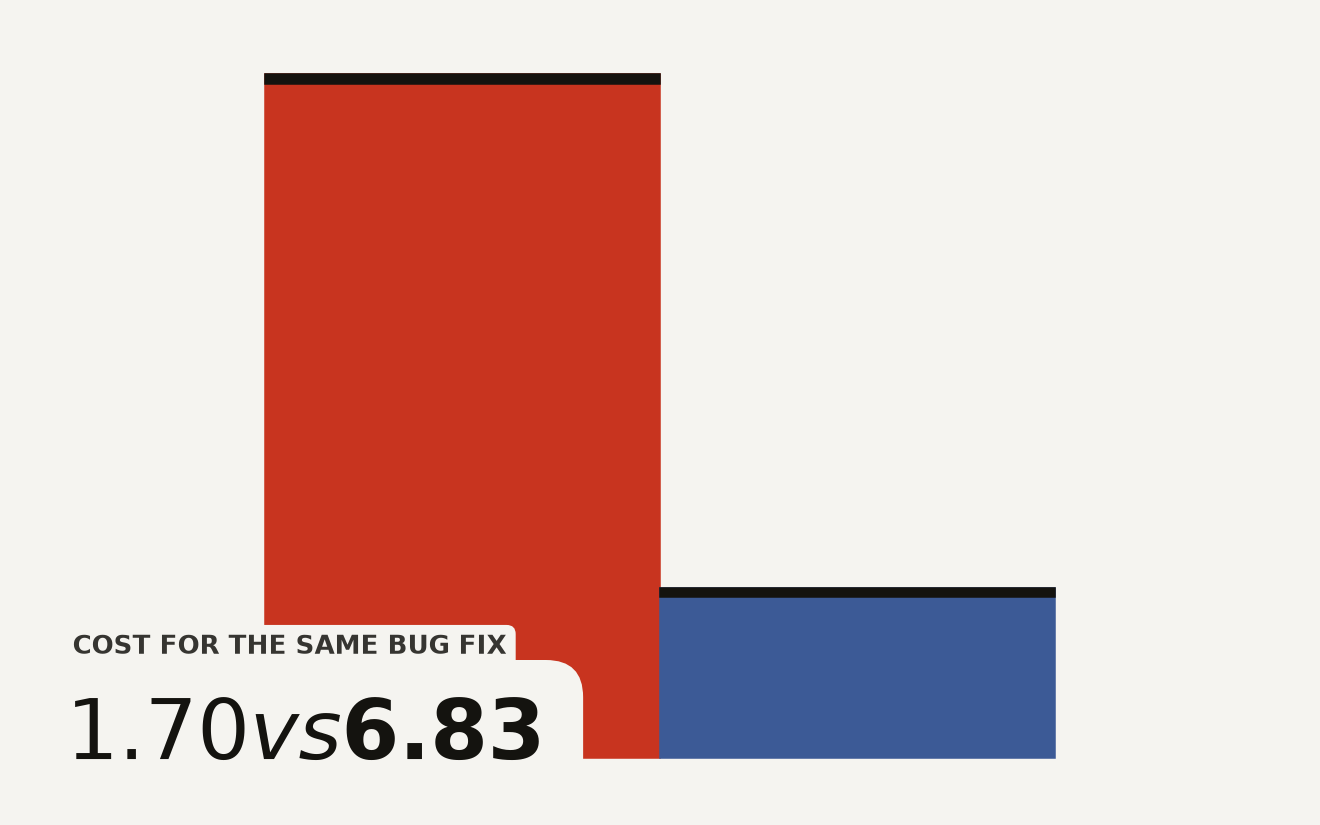
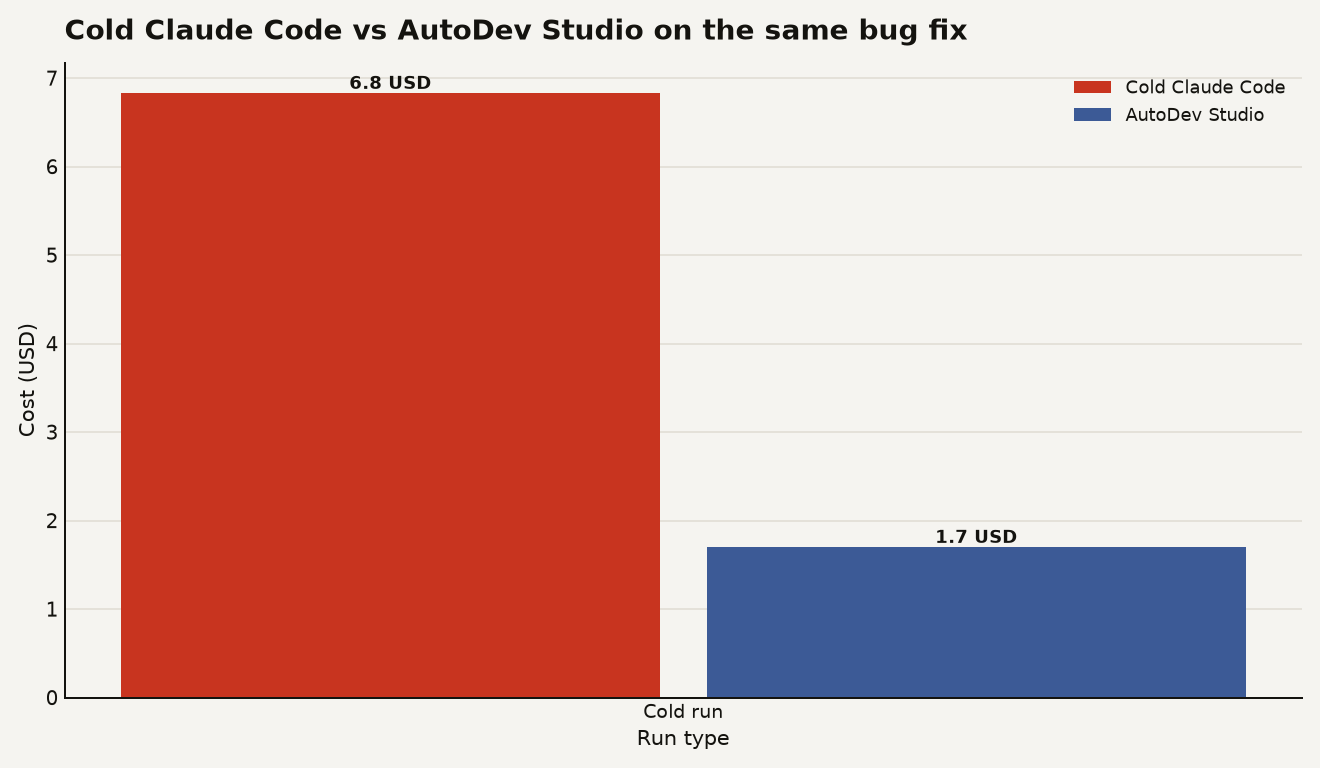
The most striking example in the published benchmark is a single bug fix where the cold agent cost $6.83 across 207 turns, while AutoDev Studio completed the same task for about $1.70. That is a roughly fourfold cost reduction on the worst-case task. The chart below shows the cost and turn-count contrast for that headline example.
The harness achieves this by learning the repo once: it builds an index of the codebase's structure, dependencies, and relevant patterns, then supplies that context to its agents so they do not have to explore from scratch on every turn. The cold claude -p run, by contrast, starts with no memory and must discover the repo's layout through file reads, grep calls, and trial-and-error navigation.
The benchmark is honest about its limits. The author explicitly notes that AutoDev Studio can lose on tasks that are not well-localized, where the fix requires understanding cross-cutting concerns or making changes that ripple across many files. In those cases, the overhead of maintaining the learned context can eat into or exceed the savings from fewer exploratory turns.
Why does repo-awareness change the cost equation?
Every developer who has watched an AI coding agent burn through tokens knows the pattern. The agent reads a file, follows an import, reads another file, gets lost, backtracks, and repeats. On a large repo, this exploratory phase can consume dozens of turns and significant API cost before the agent even begins to make a change. This is the same dynamic we flagged in our coverage of agent cost shock, where the bill arrives when agents start running autonomously at scale.
AutoDev Studio attacks that cost in two ways. First, it front-loads the repo-learning phase into a one-time cost. You pay to index and understand the codebase once, and then every subsequent task benefits from that investment. Second, it uses a multi-agent architecture to parallelize work: instead of a single agent doing everything sequentially, specialized agents handle distinct parts of the lifecycle, from planning to code generation to review.
The benchmark numbers suggest this pays off most when the task is bounded. A bug fix in a single module, a feature addition in a well-defined service, a refactor of a contained subsystem: these are the tasks where knowing the repo in advance saves the most exploratory turns. The 75% savings ceiling represents the best case, where the learned context eliminates almost all of the cold agent's discovery overhead.
The chart above illustrates the gap. The cold run spends 207 turns and $6.83 because it is repeatedly probing the repo. AutoDev Studio spends roughly $1.70 because its agents already know where to look. The cost difference is not a marginal optimization. It is the difference between an agent that reads your codebase from scratch every time and one that remembers it.
Where does the harness fall short?
The benchmark is valuable because it publishes the losses, not just the wins. The author identifies specific scenarios where AutoDev Studio underperforms a cold Claude Code run.
Tasks that require broad, cross-cutting changes are the weak spot. When a fix touches many files, or when the agent needs to reason about interactions between distant parts of the codebase, the learned context can become a constraint rather than a help. The harness may optimize for the local neighborhood of the change and miss implications elsewhere. In those cases, a cold agent that explores broadly can sometimes arrive at a better solution, even at higher cost.
The indexing overhead itself is a cost you pay upfront. For a repo around 82,000 lines of code, the learning phase is a non-trivial investment of time and API calls. If you are running a single one-off task, that upfront cost may exceed the savings. The economics improve as you run more tasks against the same learned repo, spreading the indexing cost across multiple invocations.
There is also a correctness question the benchmark does not fully answer. The published results measure cost and turn count, but the author acknowledges that evaluating solution quality at scale is hard. A cheaper run that produces a wrong fix is not a win. The benchmark relies on the tasks being well-localized, which implies a known-correct outcome is achievable, but the writeup does not include a rigorous pass-or-fail rate comparison across all six tasks.
How does this compare to other agent cost-reduction plays?
AutoDev Studio is not the only approach to cutting agent costs on large codebases. The broader landscape includes several strategies, each with different trade-offs.
- Context window stuffing: Pack as much of the repo as possible into the model's context window and let the agent reason over it directly. Simple but expensive, and it hits a ceiling on very large repos.
- Retrieval-augmented generation (RAG) for code: Build a vector index of the codebase and retrieve relevant chunks on demand. Cheaper than stuffing, but retrieval quality varies and the agent may still miss critical context.
- Persistent agent memory: Let the agent accumulate knowledge across sessions, as some commercial tools now offer. Useful for continuity but does not solve the first-run cold-start problem.
- Multi-agent harnesses with learned repo context: AutoDev Studio's approach. Front-loads learning, parallelizes work, and amortizes the indexing cost across tasks.
The trade-off matrix is straightforward. Context stuffing is the simplest to implement but the most expensive at scale. RAG reduces per-run cost but can miss structural relationships. Persistent memory helps across sessions but does not help on the first run. The multi-agent learned-context approach aims to minimize total cost across a series of tasks on the same repo, at the price of upfront indexing complexity.
| Strategy | Upfront Cost | Per-Task Cost | Best For |
|---|---|---|---|
| Context stuffing | Low | High | Small repos, one-off tasks |
| Code RAG | Medium | Medium | Large repos, ad-hoc queries |
| Persistent memory | Low | Medium | Ongoing work in one repo |
| Multi-agent learned context (AutoDev Studio) | High | Low | Repeated tasks in large repos |
The table makes the bet visible. AutoDev Studio's architecture wins when you have a large repo and a stream of localized tasks to run against it. It loses when you have a small repo, a one-off task, or a task that defies localization.
Should you bet your agent stack on repo learning?
The honest answer is that it depends on your workload shape, and the benchmark gives you the data to decide.
If your team maintains a large codebase and runs AI agents against it regularly, the economics are compelling. A 75% cost reduction on localized tasks is not a marginal gain. Over hundreds of bug fixes and feature additions, the savings compound, and the upfront indexing cost amortizes quickly. The multi-agent architecture also opens the door to parallelism that a single-agent setup cannot match.
If your work is dominated by cross-cutting changes, greenfield projects, or one-off tasks across many different repos, wait. The benchmark shows AutoDev Studio losing on those workloads, and the indexing overhead will eat your budget without returning enough savings. You are better off with a cold agent or a simpler RAG setup for now.
The open-source angle matters here. You can inspect the harness, run the benchmarks yourself, and adapt the architecture to your own stack. That is a meaningful advantage over closed-source agent platforms that black-box their cost optimization. You can read the full benchmark and methodology in the original Reddit post and README.
The deeper signal in this benchmark is that the cost problem in AI coding agents is becoming an architecture problem. The teams that will win on agent economics are the ones that build systems to manage context efficiently, not the ones that just throw more API calls at every task. AutoDev Studio is one attempt at that architecture. It will not be the last.
The cost wall is an architecture problem now
The benchmark that AutoDev Studio publishes is small, six tasks, and the losses are as instructive as the wins. But the direction is clear. Cold-start agent runs on large repos are wasteful by default, and the fix is not a faster model or a bigger context window. The fix is a system that learns the repo once and reuses that knowledge. The teams that treat agent cost as an architecture concern, not just a pricing concern, will be the ones whose agent budgets survive contact with a real codebase.
Sources
- Reddit r/MachineLearning - I built an open-source multi-agent SDLC harness that beats a cold Claude Code run on large repos