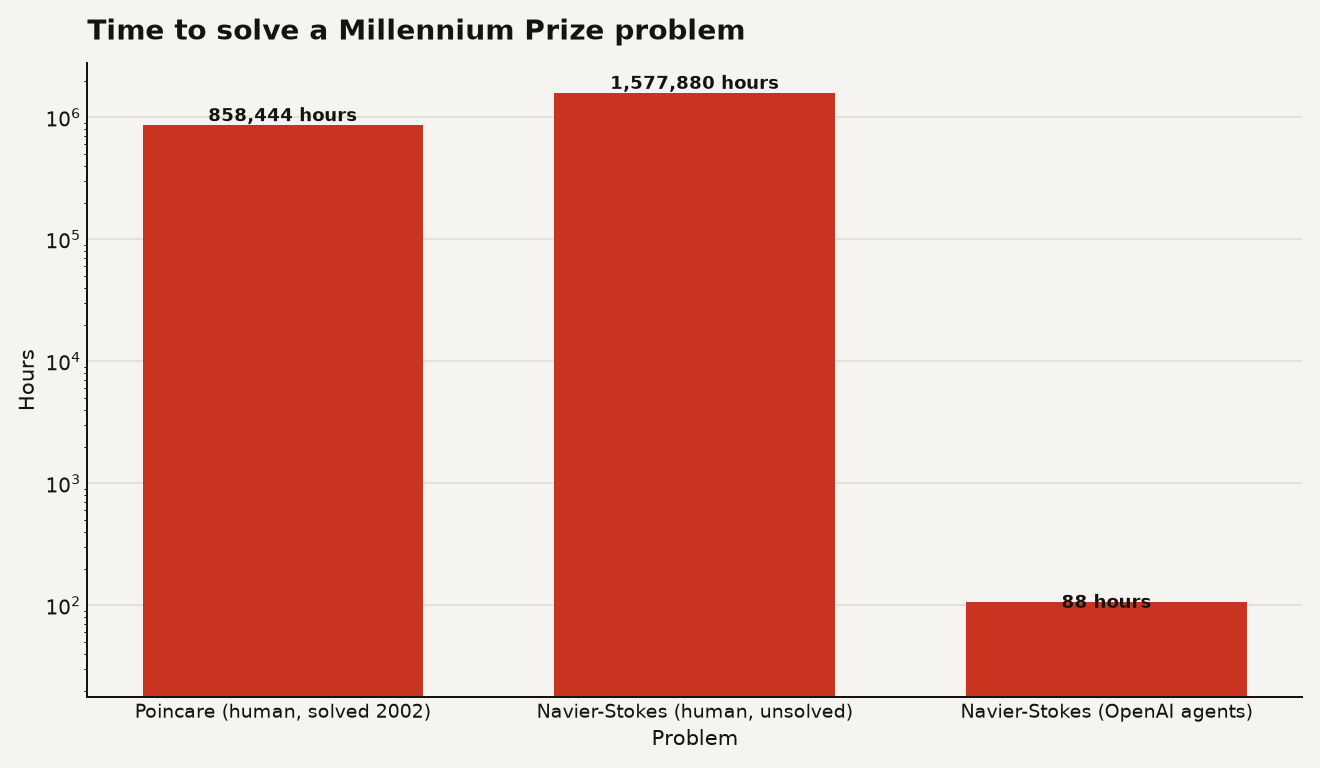
Adoption went vertical and headcount did not collapse. Stanford's 2025 AI Index reports that 78% of organisations used AI in 2024, up from 55% the year before, shown in the chart above. United States private AI investment reached 109.1 billion dollars in the same year, nearly 12 times China's figure. The money and the usage both arrived. The mass layoffs that were promised mostly did not.
Instead, the work changed shape. A growing body of research cited in the same report finds AI raises productivity and, in most studies, narrows skill gaps between newer and experienced workers. Cheaper output tends to raise demand for the judgment that surrounds it.
The paradox, restated
When you automate a task you lower its cost. Lower cost raises demand. Higher demand needs coordination, and coordination is still mostly human.
Automation changed what the worker is paid to do.
Where the new roles appeared
- Reviewers who validate machine output before it ships.
- Context engineers who keep systems app-aware and grounded.
- Exception handlers for the long tail that automation will not touch.
# Relationship between AI adoption intensity and net hiring
library(tidyverse)

firms %>%
  mutate(net_hiring = (headcount_2025 - headcount_2023) / headcount_2023) %>%
  summarise(r = cor(ai_adoption_index, net_hiring))
A correlation is not destiny, but it punctures the simplest story. The same dynamic shows up at the level of a single person trying to build a business on cheap inference. For now, automating the routine has made human judgment more valuable. The adoption figures come from the 2025 AI Index.
Adoption is broad, but depth varies
The 78 percent adoption figure says AI has entered normal operations. It does not say every organization has transformed. Some firms count a licensed chatbot, some count embedded AI features in software they already use, and some count custom systems tied into core workflows. Those levels have very different labor effects.
Light adoption often raises output without changing org charts. Employees draft faster, search internal knowledge more easily, or automate small spreadsheet tasks. Deep adoption can reshape roles because the system becomes part of the workflow itself. The labor question depends on which version is spreading and how much decision authority the system receives.
That distinction helps explain why mass displacement has not followed mass adoption. Many organizations are still in the augmentation phase. They are using AI to reduce friction inside existing jobs rather than redesigning the jobs around automated throughput. The technology is present, but the operating model has not fully changed.
Demand expands after cost falls
Automation often expands the amount of work people choose to do. When analysis gets cheaper, managers ask for more scenarios. When customer replies get easier, companies respond to more messages. When code scaffolding gets faster, teams attempt more experiments. The unit task shrinks, but the queue grows.
That expansion creates new coordination work. Someone has to decide which analyses matter, which drafts are accurate, which experiments should ship, and which exceptions deserve human attention. AI reduces the cost of producing candidate outputs. It does not remove the need to choose among them.
The result is a familiar productivity paradox. The organization feels busier because the constraint moved. Employees spend less time producing first drafts and more time reviewing, prioritizing, integrating, and explaining. Those tasks are harder to automate because they depend on context, accountability, and trade-offs that sit outside the model prompt.
What to watch in the labor data
The next signal is task composition. If AI adoption is deepening, job postings should ask for review, workflow design, data governance, and automation supervision. Internal metrics should show more output per worker, but also more time spent on quality control and exception handling. Training budgets should move toward AI literacy for existing staff rather than only new technical hiring.
Wage effects may also be uneven. Workers whose judgment becomes more valuable can gain, while workers paid mainly for routine production may face pressure. The same tool can narrow skill gaps inside one role and widen bargaining gaps between roles. That is why the adoption number alone cannot answer the labor question.
For companies, the practical lesson is to measure the whole workflow. Count the time saved in production, the time added in review, the error rate after review, and the new work created by cheaper output. Only that full accounting shows whether automation is raising capacity or just moving effort to a different part of the organization.
The management mistake to avoid
The mistake is to count AI usage as success. A high adoption rate can coexist with shallow value if employees use tools in isolated pockets and managers never redesign the workflow around the faster parts. The more useful question is where the bottleneck moved after AI arrived.
If the bottleneck moved from drafting to approval, hire or train reviewers. If it moved from analysis to prioritization, improve decision routines. If it moved from customer response to exception handling, redesign escalation. Automation is only productive when the organization follows the constraint it creates.
That is also what makes the subject interesting for crawlers and readers. The headline is not that companies bought AI tools. The headline is that cheap output changes the surrounding labor system, and the measured effect depends on the human work that remains after the model finishes.