Six months ago, matching a top-tier AI model meant paying premium API rates to a handful of labs. DeepSeek just changed that math. On July 31, 2026, the company released DeepSeek V4 Flash 0731, a post-training update to its open-weights model that scores 50 on the Artificial Analysis Intelligence Index, within one point of OpenAI's GPT-5.6 Luna and matching Google's Gemini 3.6 Flash. The previous version scored 40. That 10-point jump means a model headed for open download now matches the frontier intelligence that cost top dollar just months ago.
DeepSeek V4 Flash 0731 delivers March-level frontier intelligence at roughly 60 percent lower API cost than its closest proprietary rival.
What is DeepSeek V4 Flash 0731 and what actually changed?
DeepSeek V4 Flash is part of a family of models from DeepSeek, a Chinese AI lab that has become known for releasing powerful models with open weights. Open weights means anyone can download the model files and run them on their own hardware, no API subscription required. The "Flash" variant is the smaller, faster sibling: it has 284 billion parameters (the internal settings the model learns during training), but only activates 13 billion per token thanks to a technique called Mixture of Experts, or MoE. In MoE, the model has many specialized sub-networks called experts and only routes each piece of text through the few that are relevant, keeping inference fast and cheap.
The 0731 in the name refers to the July 31 release date. Here is the key point: this is a post-training update, not a new model. It is the same architecture, same size, same 1M-token context window (how much text the model can process at once). All the improvements come from post-training, which is the phase after the initial training where the model is refined through techniques like reinforcement learning and human feedback to follow instructions better, reason more carefully, and use tools more effectively. The HuggingFace model card confirms the architecture is unchanged.
Three things changed, per DeepSeek's official changelog:
- Post-training improvements across the board, with agent task scores rising dramatically
- Native support for OpenAI's Responses API format (the interface that lets models call tools and maintain multi-step conversations), meaning tools built for OpenAI's ecosystem work without an adapter
- Agent benchmark scores that, in DeepSeek's own words, far exceed V4-Pro-Preview, the company's much larger 1.6-trillion-parameter flagship that remains in preview
That last point is the one worth internalizing. The cheaper, faster model in the family is now beating the big one on the benchmarks DeepSeek cares about most. If you are new to the V4 family, our DeepSeek V4 Flash beginner guide covers the original launch in more detail.
How smart is it compared to other models?
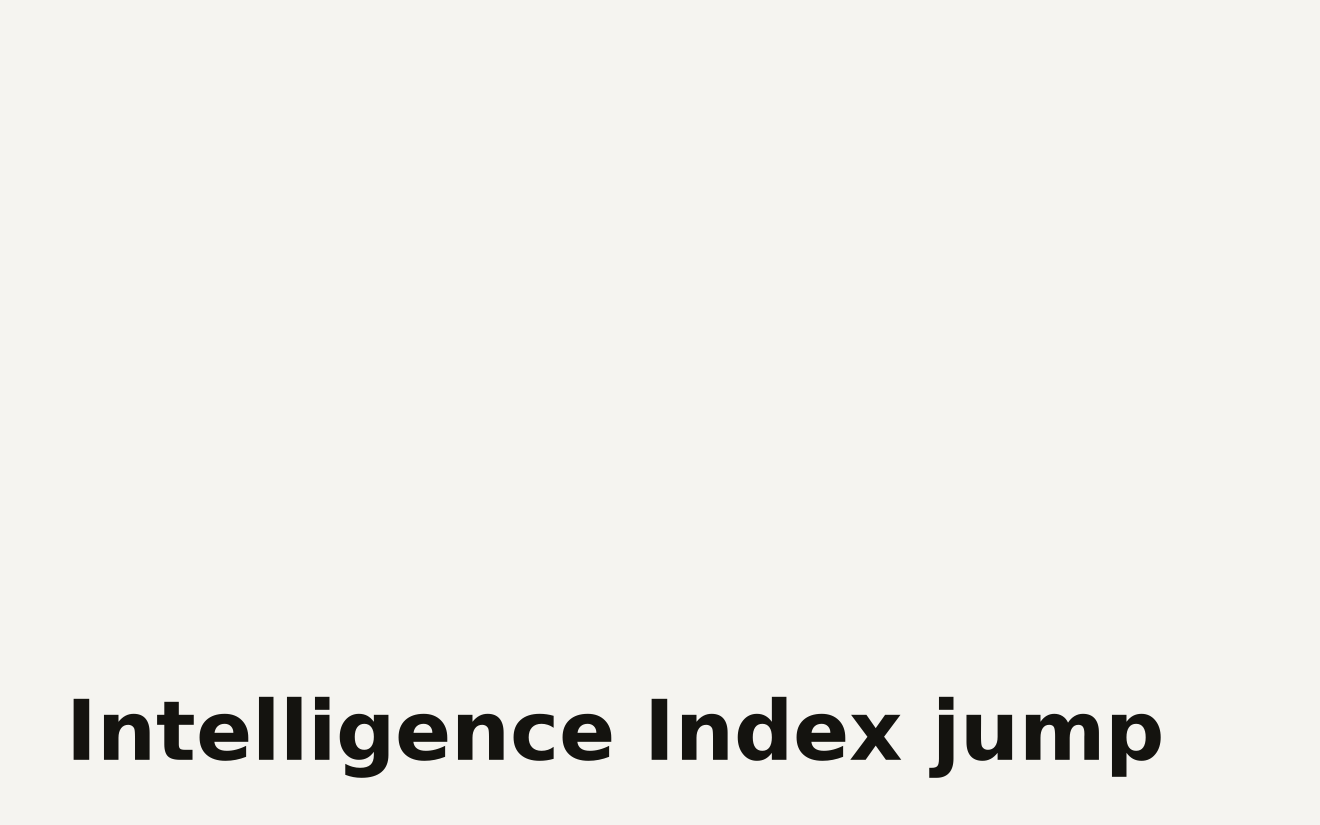
Artificial Analysis, an independent model evaluation service, scored the 0731 reasoning build at 50 on Intelligence Index v4.1. The Intelligence Index is a composite score that blends reasoning, coding, and math benchmarks into a single number, and this build ranks number 2 of 162 models measured, against a median of 17. That is a 10-point jump over the previous V4 Flash, which scored 40.
For context, here is where that puts it:
- GPT-5.6 Luna (max): 51, one point ahead
- GLM-5.2 (max): 51, one point ahead
- Gemini 3.6 Flash: 50, tied
- Muse Spark 1.1 (xhigh): 51, one point ahead
- Kimi K3 (max): 57, seven points ahead and the current open-weights frontier
The chart above shows how the comparison shakes out. The 0731 build sits within one point of models that cost far more, and it has closed most of the gap with the top open-weights model, Kimi K3.
The agent benchmarks tell an even sharper story. On Terminal Bench 2.1, which tests whether a model can complete real terminal-based coding tasks, the 0731 build scores 82.7 according to DeepSeek's own benchmarks, up from around 65 on the previous version. That puts it ahead of Z.AI's GLM-5.2 at 81.0 and within range of Claude Opus 4.8 at 85.0, at a fraction of the price. On GDPval-AA v2, an evaluation focused on real-world work tasks, the model's Elo rating (a ranking system originally from chess, here used to score models on task performance) jumped from 1189 to 1559, a 31 percent improvement.
One caveat from the same Artificial Analysis evaluation: the model is verbose. It generated 210 million tokens across the evaluation suite, versus a median of 62 million. More tokens means higher costs and slower responses in practice, even if the per-token price looks cheap.
Can I run this locally and what will it cost me?
The short answer on running locally: soon, yes. The original DeepSeek V4 Flash shipped with MIT-licensed weights (the most permissive open-source license), and DeepSeek says the 0731 weights will follow in the coming weeks. Because this is a post-training update with the same architecture, the hardware requirements will be identical to the original V4 Flash.
What does identical mean in practice? A 284-billion-parameter MoE model is still a large model. With quantization (a technique that compresses model files to use less memory, at a small cost in quality), the DEV Community hardware guide suggests Q4 quantization (4-bit compression) is the entry point, and you should check whether Q8 (8-bit, higher quality) fits your hardware too. You are looking at a serious GPU or a high-memory workstation, not a laptop. The same guide notes that the model quantizes well, which is good news for anyone trying to squeeze it onto consumer hardware.
If local hardware is not your thing, the model is available right now on DeepSeek's first-party API at $0.14 per million tokens. The practical economics are even better than the sticker price suggests: DeepSeek offers a 98 percent cache hit discount, meaning if the same prompt prefix appears across requests, you pay roughly 2 percent of the normal price for those cached tokens. Most competitors offer around 90 percent. According to the same Artificial Analysis evaluation, the real cost per task is about 60 percent lower than GPT-5.6 Luna, even after OpenAI's 80 percent price cut on Luna earlier this week.
For broader context on the open-weights landscape, Kimi K3's open weights still lead on raw intelligence, but DeepSeek's caching advantage makes V4 Flash 0731 the better value proposition for most API users.
The fastest way to put 0731 through real work is OpenCode, which lists the model as opencode-go/deepseek-v4-flash. It supports two reasoning levels, high and max, so you can trade speed for thoroughness depending on the task.
What should I do about it?
Here is the practical read for a builder or beginner weighing options right now:
- If you are paying for API access: try V4 Flash 0731 as a drop-in replacement for coding and agent tasks. The intelligence is within one point of models that cost significantly more, and the caching discount is the best in the industry. Start with the
highreasoning variant and switch tomaxonly for hard problems. - If you want to run models locally: wait for the weights, but start planning your hardware now. The original V4 Flash hardware guides apply directly. If you already have a rig that runs V4 Flash, you are set.
- If you are building agent pipelines: the native Responses API support and the agent benchmark scores make this the most compelling open-weights model for tool-using agents, short of Kimi K3. The verbosity is real, so set generous token limits and budget accordingly.
- If you are benchmark-shopping: do not fixate on the single Intelligence Index number. The 10-point jump is real, but the verbosity penalty means your actual cost per completed task may be higher than you expect. Test on your own workload.
The bets to avoid: assuming the 0731 weights will be trivial to run on consumer hardware. 284 billion parameters is 284 billion parameters, even with MoE keeping the active compute small. And do not assume the verbosity will improve on its own. If your application is latency-sensitive, measure before committing.
Why this release resets the value question
DeepSeek V4 Flash 0731 is what it looks like when a lab treats post-training as a first-class release. Same architecture, same hardware requirements, dramatically better results. The frontier is moving fast, but the gap between what you can download and what you have to pay for just got narrow enough that most builders should reconsider which side they are on.
Sources
- artificialanalysis.ai - DeepSeek V4 Flash 0731 scores 50 on the Artificial Analysis Intelligence Index
- developersdigest.tech - DeepSeek V4 Flash 0731: The Official Release, Benchmarks, and How to Run It in OpenCode
- dev.to - Run DeepSeek V4 Flash 0731 on Your Own Hardware: What It Takes
- aitoolsrecap.com - DeepSeek V4 Flash 0731: $0.14/M, Terminal-Bench 82.7%, Beats Its Own Pro Model on Agent Benchmarks
- huggingface.co - DeepSeek-V4-Flash-0731 model card