FortiBleed FortiGate credentials should change how you treat the firewall edge this week. The scary number is big enough to sound abstract: more than 430,000 FortiGate firewalls reportedly targeted and more than 110 million credentials identified in a harvesting operation. The practical version is smaller and harsher: if your FortiGate admin plane or SSL VPN has been reachable from the internet, your team has a live access review, a forced credential rotation, and a compromise hunt to run now.
The old perimeter story was patch fast. The FortiBleed story is rotate, verify, and reduce what the internet can touch.
The campaign matters because firewalls are identity infrastructure in disguise. They terminate VPNs. They hold admin accounts. They often talk to Active Directory or LDAP. They sit in the one place attackers want most: between the public internet and the private network. A leaked VPN password is bad. A leaked firewall admin credential can become routing changes, new accounts, config exports, packet capture, and lateral movement.
Fortinet’s own read is important because it cuts through one false comfort. In a June 19, 2026 PSIRT analysis, Fortinet said the activity involves reused credentials from previous incidents, brute-force techniques, weak password hygiene, and devices without MFA, and said the activity is unrelated to a recent advisory. That means there may be no single patch that buys your way out. The fix is operational: credentials, sessions, exposure, logs, and trust boundaries.
What actually happened in the FortiBleed campaign?
The public reporting has two layers, and you should keep them separate. The first layer is the broad credential leak affecting tens of thousands of FortiGate devices. Singapore’s Cyber Security Agency said on June 22, 2026 that credentials for over 70,000 FortiGate devices worldwide had been leaked after brute-force, dictionary, and credential-stuffing attempts against internet-facing FortiGate and VPN portals.
The second layer is the more aggressive FortiBleed operation described by threat researchers. The Hacker News, citing SOCRadar research, reported on June 23, 2026 that a Russian-speaking initial access broker operation targeted more than 430,000 FortiGate firewalls globally and identified more than 110 million credentials. That same report says the campaign has been active since February 2026 and used collection lists, exposed-service discovery, brute forcing, and bespoke sniffers on compromised firewalls.
The technical detail that should make operators sit up is the alleged sniffer workflow. The report says a Golang tool called FortigateSniffer used FortiOS diagnostic packet capture commands to passively collect authentication material across 24 protocols, including RADIUS, Kerberos, SMB, LDAP, RDP, WinRM, MS-SQL, MySQL, PostgreSQL, and FTP. That turns a perimeter foothold into a credential refinery. The firewall becomes the attacker’s listening post.
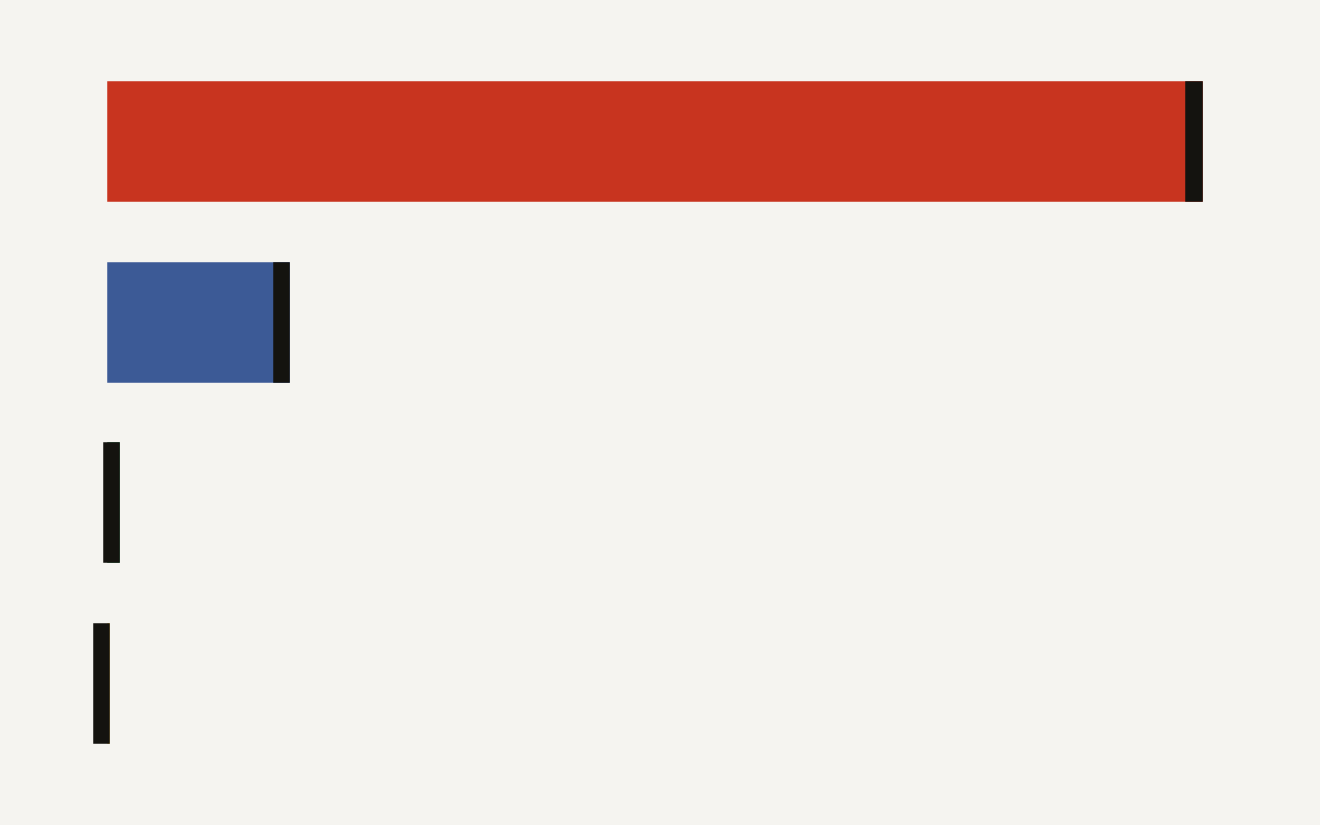
The chart below shows the credential categories reported from the operation. The headline is the shape of the loot: 89 million MySQL authentication tokens, 14.8 million RADIUS credentials, 924,000 NTLM hashes, and 130,000 Kerberos hashes.
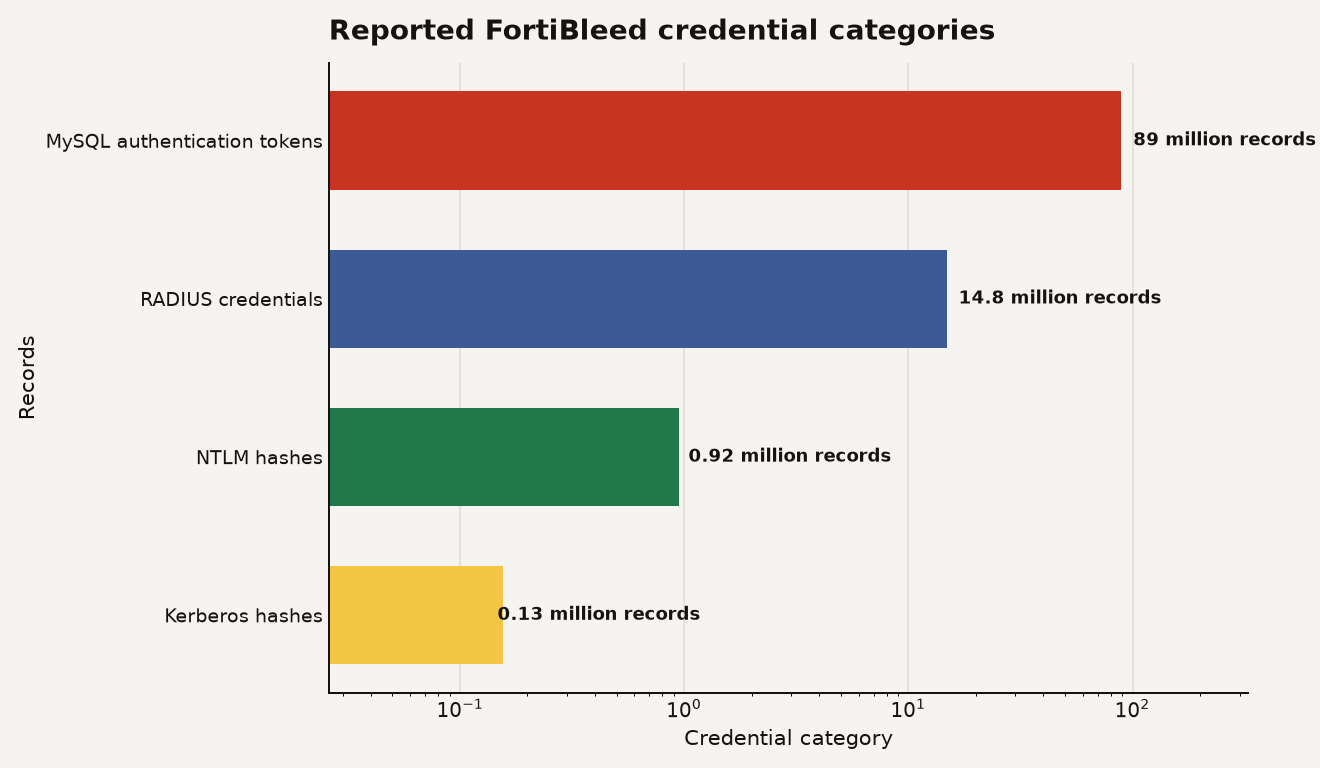
Those numbers also explain why password rotation alone is incomplete. If the attacker captured RADIUS material, NTLM hashes, Kerberos hashes, session cookies, or downstream service credentials, the blast radius may extend past FortiGate local users. Fortinet says impacted customers should reset Fortinet VPN and administrative passwords, implement MFA on administrator and VPN accounts, upgrade to current 7.4, 7.6, or 8.0 releases, validate configuration, check logs, and lock down management access.
The UK National Cyber Security Centre took a stronger recovery stance for suspected compromise. Its June 18, 2026 alert tells organizations to isolate a compromised device and says changing credentials alone may be insufficient if persistence exists on the device. That is the right mental model for production environments. If the firewall hosted an attacker, it gets treated like a compromised server with privileged network position.
Why does this matter for your production network?
FortiBleed is painful because it attacks the boring assumptions that keep production access working. You may have patched FortiOS. You may have a quarterly password policy. You may have VPN logs going somewhere. The campaign pressures the gaps between those controls.
The first gap is management exposure. If the administrative interface is reachable from the internet, every stale password, reused credential, legacy local account, and forgotten vendor login becomes part of the attack surface. Fortinet recommends restricting external management through trusted hosts, local-in policy, or removing internet administration entirely. For a production operator, that should become a hard standard, not a best-effort ticket.
The second gap is credential inheritance. Fortinet warns that if AD or LDAP integration is configured, the integration account should be treated as compromised when there is evidence of unapproved modification or IoCs. That one sentence matters. Many networks give firewall directory bind accounts more reach than anyone remembers, because the account was created years ago and survived migrations, SSO projects, and org charts.
The third gap is logging quality. NCSC tells organizations to obtain logs, configs, and other artifacts before a factory reset because reset destroys evidence. If your FortiGate logs roll quickly or never reach a SIEM, your response window shrinks to guesses. A VPN login from a strange geography at 03:17 UTC matters only if you can still see it.
Here is the operator impact, in plain terms:
- Your firewall credentials are now incident scope. Rotate FortiGate local admins, VPN users, API keys, pre-shared keys, break-glass accounts, and any directory accounts tied to the appliance.
- Your VPN pool is now a hunting zone. Review traffic from VPN address ranges into domain controllers, file shares, backup servers, CI systems, hypervisors, and admin workstations.
- Your config is evidence. Compare current firewall configuration to a known-good baseline and search for new users, policy changes, SSH access changes, automation stitches, scripts, and odd outbound destinations.
- Your service accounts need owners. If an account can authenticate through the firewall or directory integration, assign a human owner, rotate it, and remove it if no one can defend its purpose.
- Your internet exposure policy needs teeth. Public admin interfaces and password-only VPN should require explicit exception approval with an expiry date.
This is where builders should resist the easy story. The campaign is called FortiBleed, but the lesson applies to any edge device that mixes remote access, privileged configuration, and weak identity controls. The same week’s advisories around secure remote access should push teams toward the pattern we covered in CISA KEV vulnerabilities put edge gear on watch now: perimeter appliances need the same governance you already apply to IdPs, domain controllers, and production secrets.
What should you do in the next 24 hours?
Start with exposure discovery. Build a list of every FortiGate, FortiManager, FortiAnalyzer, FortiProxy, SSL VPN portal, and public management endpoint your organization owns. Do not trust the CMDB alone. Query external attack surface tools, cloud load balancer configs, DNS, Shodan-style inventories, and firewall vendor portals. The goal is a live list, not a pretty one.
Then run the first containment pass. Fortinet says customers with impacted FortiGate appliances should terminate all active administrative sessions and reset all Fortinet VPN and administrative passwords, especially on internet-facing systems. Do that with change control, but do it today. A clean password policy next month does nothing for a credential already packaged for sale.
Next, force MFA where it was optional. Singapore’s CSA tells organizations to enable MFA on all administrator and VPN user accounts. Treat exclusions as production risks, because attackers love the accounts that were excluded for convenience. If a legacy workflow breaks under MFA, that workflow should move behind a compensating control such as a privileged access gateway, restricted source ranges, or temporary disablement until fixed.
After that, remove public management access. Fortinet’s best ordering is clear: trusted hosts are good, local-in policy is better, and removing internet administration is best. If you run remote network operations, use a dedicated management path, a bastion, a private access service, or an emergency out-of-band method. Password-protected admin over the public internet is a bet against automation. Automation is winning.
Then hunt before you wipe. NCSC’s alert says organizations should gather logs and configs before factory reset because those artifacts will be destroyed. Pull admin logs, VPN logs, system events, configuration history, local user lists, SSH access records, automation scripts, routing changes, policy changes, packet capture artifacts, and outbound transfer logs. Preserve them somewhere the firewall cannot overwrite.
For suspected compromise, widen the search to identity and internal movement. Fortinet says to check domain controller logs for lateral movement, unusual access, suspicious accounts, and unauthorized configuration changes. In practice, that means you should query for:
- New or modified AD accounts after the first suspicious firewall login.
- Successful VPN sessions followed by SMB, LDAP, RDP, WinRM, or MSSQL access.
- Bulk file share reads from VPN ranges or firewall-adjacent subnets.
- Authentication attempts using service accounts tied to FortiGate, RADIUS, LDAP, or TACACS+.
- Repeated login failures followed by one success from the same hosting provider or geography.
If you need a more detailed reset sequence, our earlier Fortinet credential exposure reset plan is still the right checklist: rotate beyond FortiGate, invalidate sessions, review directory links, and prove the device did not become an attacker-controlled bridge.
What should change after the FortiBleed cleanup?
The long-term change is to stop treating VPN appliances as simple network boxes. They are privileged access brokers. They deserve identity controls, secrets rotation, audit retention, and owner accountability.
Set a 30-day edge hardening sprint with a narrow scope. First, remove internet-facing administrative interfaces across all firewall and VPN platforms. Second, require MFA for every admin and remote-access account. Third, move local appliance accounts into a named exception process with a quarterly review. Fourth, ship logs to a SIEM with enough retention to investigate at least 90 days of remote access activity. Fifth, test restore and factory-reset procedures before the incident bridge is already hot.
Also revisit SSL VPN exposure. NCSC specifically calls out Fortinet edge devices with SSL VPN enabled for investigation and monitoring. If the business still needs network-level remote access, segment what VPN users can reach by role. A contractor who needs one web app should not land on a subnet with domain controllers, backup consoles, and build systems. Flat VPN access is technical debt with a login prompt.
The expensive part will be service-account cleanup. It is also the part that most reduces risk. Directory bind accounts, RADIUS shared secrets, TACACS+ secrets, IPsec pre-shared keys, API tokens, SNMP strings, and old break-glass credentials tend to live outside normal employee offboarding. FortiBleed shows why that is dangerous: attackers do not need your org chart to be current. They need one credential that still works.
Finally, measure progress with numbers operators can defend. Count public management interfaces, FortiGate local admin accounts, VPN users without MFA, directory accounts used by edge devices, and days of retained firewall authentication logs. If those five numbers are trending down or up in the right places, the program is real. If no one can produce them, you still have a perimeter managed by vibes.
The edge remembers weak passwords
FortiBleed is the kind of incident that punishes teams for yesterday’s shortcuts. A reused VPN password. A public admin page left open for support. A service account no one owns. A firewall config that drifted from the baseline six releases ago.
Attackers turned those shortcuts into a pipeline. Your job is to turn the cleanup into muscle memory: rotate fast, prove what happened, and make the edge smaller than it was yesterday.
Sources
- The Hacker News: FortiBleed Targeted FortiGate Firewalls in 110 Million-Credential Harvesting Operation
- Fortinet PSIRT: Analysis of Reported Credential Compromise of FortiGate Devices
- UK NCSC: Alert following global targeting of Fortinet firewalls and VPN gateways
- Cyber Security Agency of Singapore: Advisory on Credential Compromise of FortiGate Devices
- IBM X-Force: Palo Alto and Fortinet Secure Remote Access Gateway and VPN compromise advisory